Chapter 2
A love letter to tile and travel friends

Within two hours of landing in New Delhi I was thrust into a dinner party of young expats who had emptied three bottles of Australian wine by the time I arrived. I was offered a glass, twirling spaghetti with simmered tomatoes and orange zest between sips. I munched on Tim Tams with mint tea while explaining to an acquaintance and ten strangers who I was and why I had voluntarily decided to come here alone in late January. The AQI was a cool 412.
The following day, I woke up at noon and walked around South Delhi looking for a coffee. I explored the city in the afternoon with Lindsay, a fellow traveler and dinner party guest from the night before. Light rain did not deter us from exploring the Lodhi Gardens, but the limited visibility and the group of men following us did. Furthermore, the ever-present roundabouts and lack of crosswalks crushed our romanticized stroll through a new city. We made our way to a Haldiram’s, our friend’s favorite local chain, and ordered his recommendations, savoring each bite without bothering to check the translations.
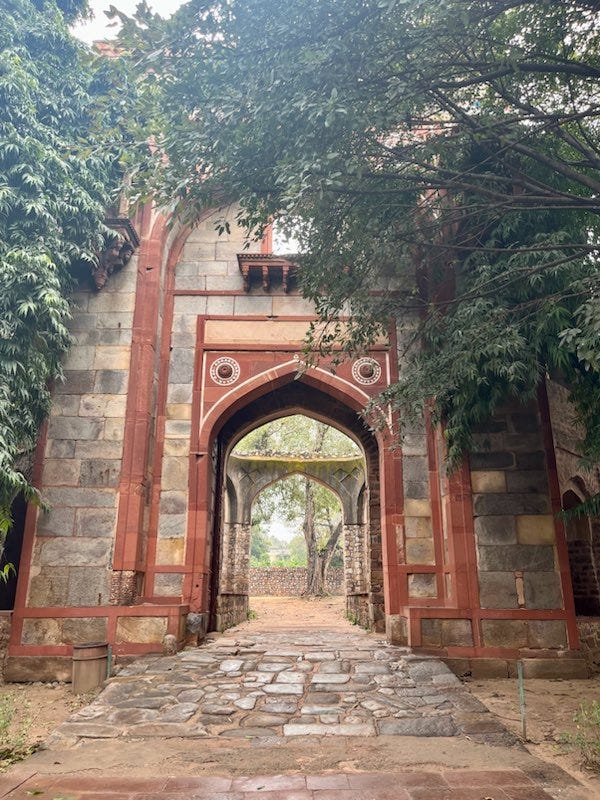
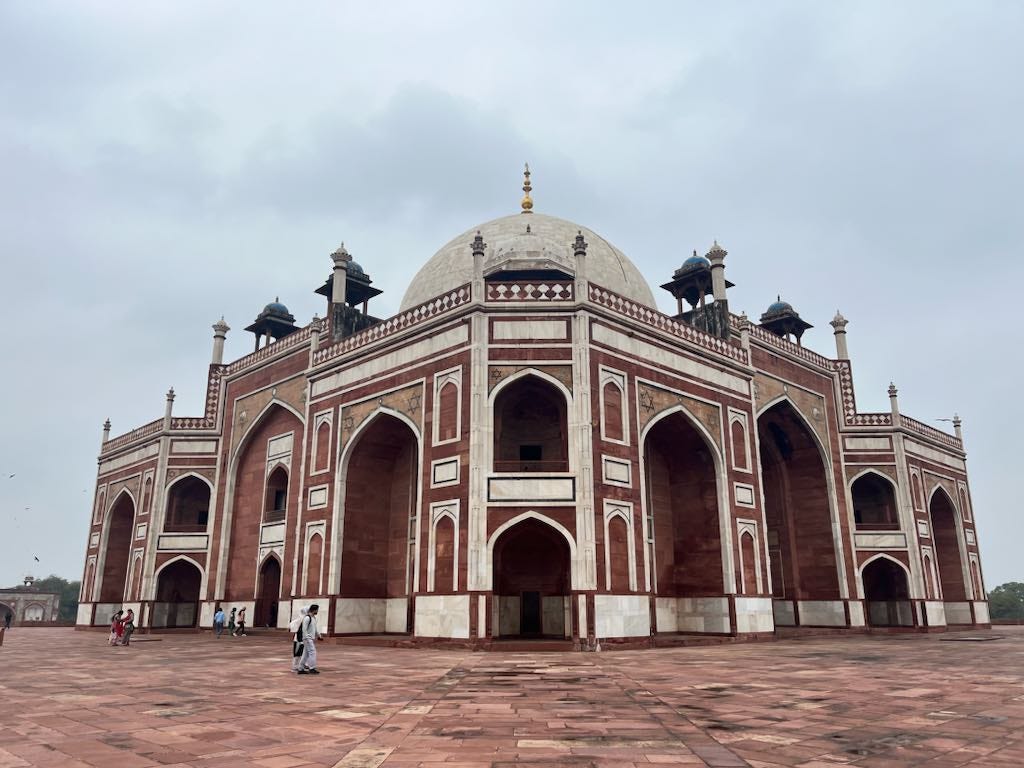
The next day we visited Humayan’s tomb, the resting place of the eponymous Mughal Emperor. Dating back to the sixteenth century, the Persian-inspired architecture, topographical symmetry, and exacting use of gardens surrounding the central structure is believed to have influenced the plans for the Taj Mahal.
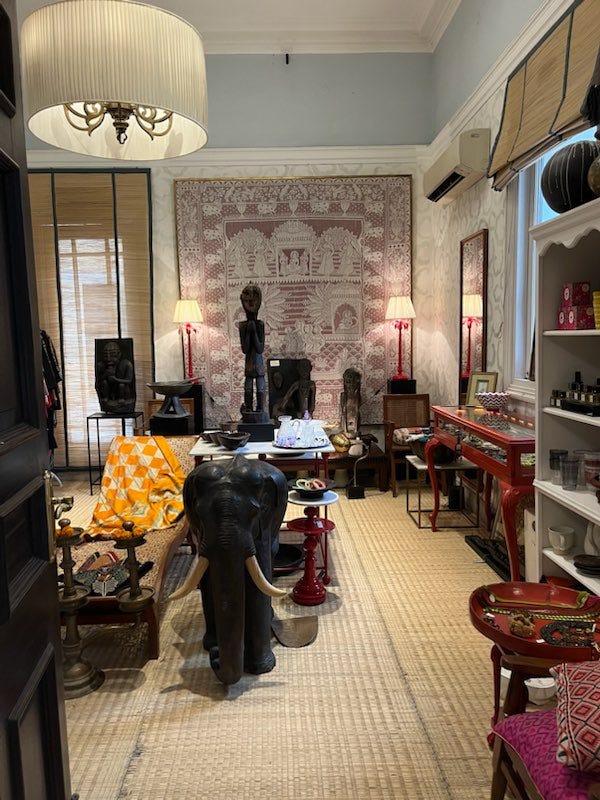
We stopped for lunch at Chor Bizarre, a Julia rec in a government building turned arts fair and restaurant (and tasteful home goods store?). Our meal was comforting and deeply flavorful, and featured a side plate with three beautiful onion varieties we neither asked for nor ate.
Unfortunately, I reached for my antibiotics immediately following this meal and spent the remainder of my afternoon back at the hotel, giving me ample time to spiral and catch up on The Crown. My body told me to relax; my mind had other plans. Laying in a hotel room accompanied only by my anxiety, I experienced my first sleepless night without an easily identifiable cause.
After a flurry of unhelpful thoughts, the sun eventually rose. I set out to meet Lindsay in Old Delhi. Even with tired eyes, I felt grateful knowing that my anxiety would likely settle in sunlight and in the presence of another human.
We met in the notoriously chaotic Chandni Chowk market, barely spotting each other across a roundabout densely packed with a carousel of bikes, tuktuks, pedestrians, and pushcarts. All five senses have never been so stimulated. I felt fully and completely alive.
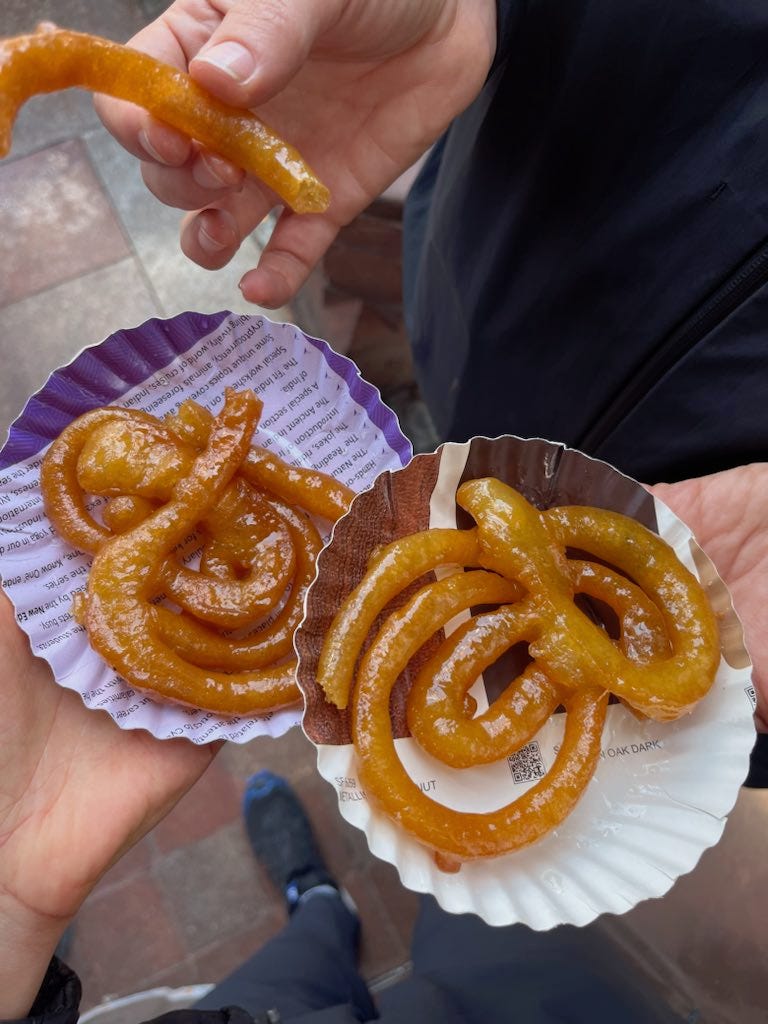
We began our quest with the market’s legendary street food (duh). We stitched together a menu via a route of recommendations. The first stop was for jalebi (a fried dough covered in sugar syrup). The only other man in line was friendly and spoke great English. He kindly bought our sticky pastries and asked where we were from (LA! New York! Wild!) in between our first bites. Syrup oozed onto my flimsy paper plate, when he pointed to me and explained that my face had good karma, but that I could do without being so emotional. My Pisces spirit felt seen.
We made two more stops: for paneer tikka masala with buttery roti, and a spice-laden kachori (a crushed piece of fried dough covered in warm dal), before heading to the spice market and then to the Red Fort, popping a preventative Pepto Bismol along the way.
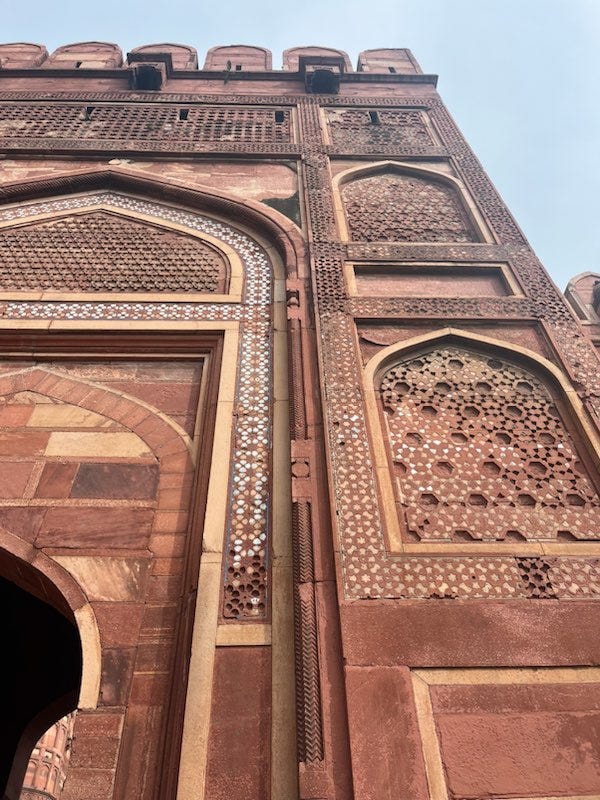
The scale of the Red Fort’s walls and architectural complexity served as a symbol of Mughal authority, wealth, and sophistication. Emperor Shah Jahan moved the capital of the Mughal empire from Agra to Delhi in the 17th century in order centralize power and access to resources. Behind its commanding red sandstone walls were many buildings, some bustling with traffic, and others left to decay with only peacocks and stray dogs lurking in their thresholds. We extolled beautiful marble work, circled the grounds, and sat under a tree for a chai. After several hours we departed for Janpath Road back in New Delhi, unexpectedly stumbling upon a textile festival, and concluded our day with massive dosas and tangy lassis served in beer steins.
The next morning, Lindsay left for Jaipur and I, for Agra. It was hard to believe that the Taj Mahal has been largely unmodified since the mid-17th century given its pristine condition. Shah Jahan, the fifth Mughal emperor, used Makrana marble, a notably hard and nonporous stone, to construct the Taj. The original steps have barely yielded to the billions of tourists who have walked its halls.
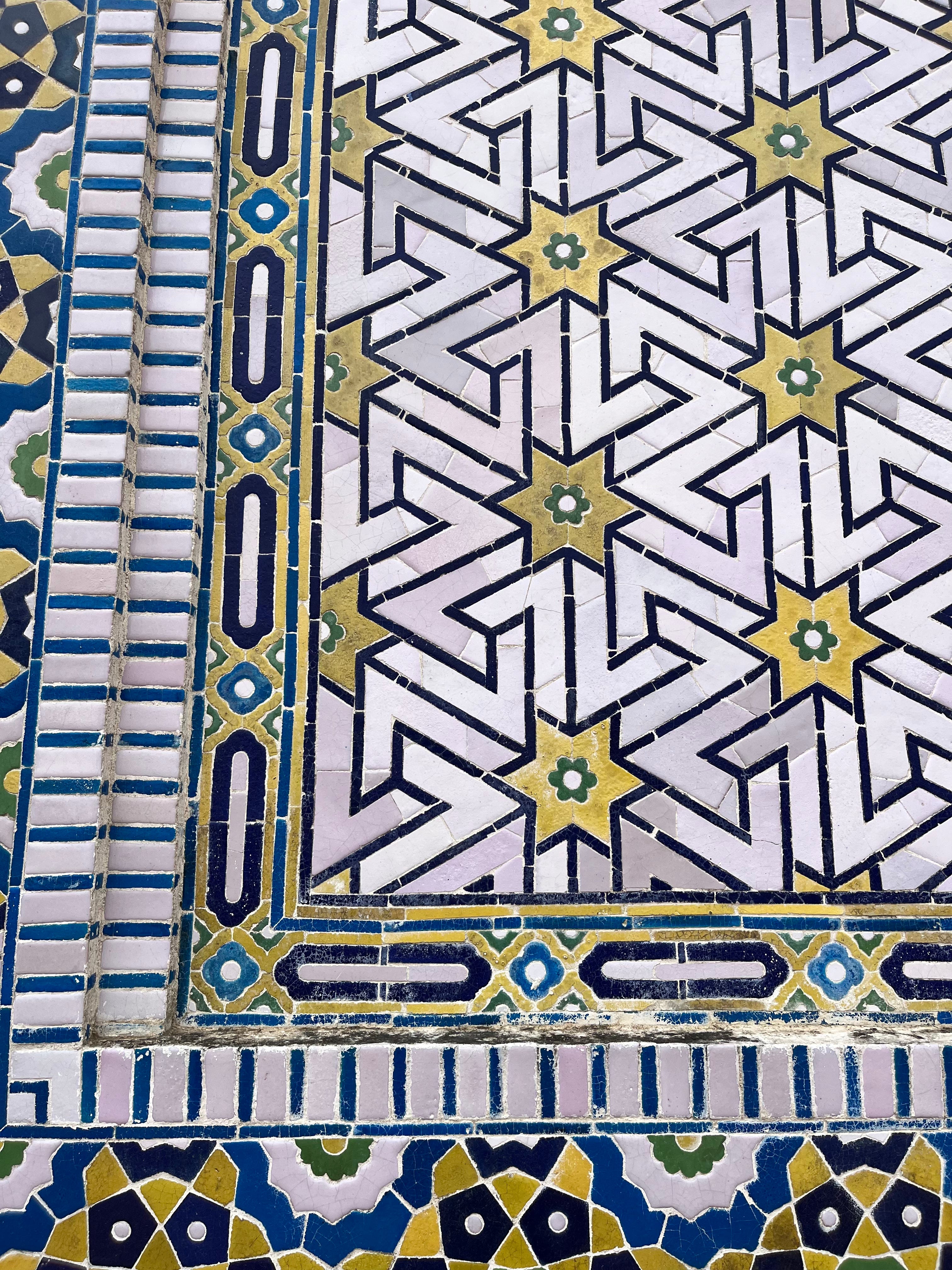
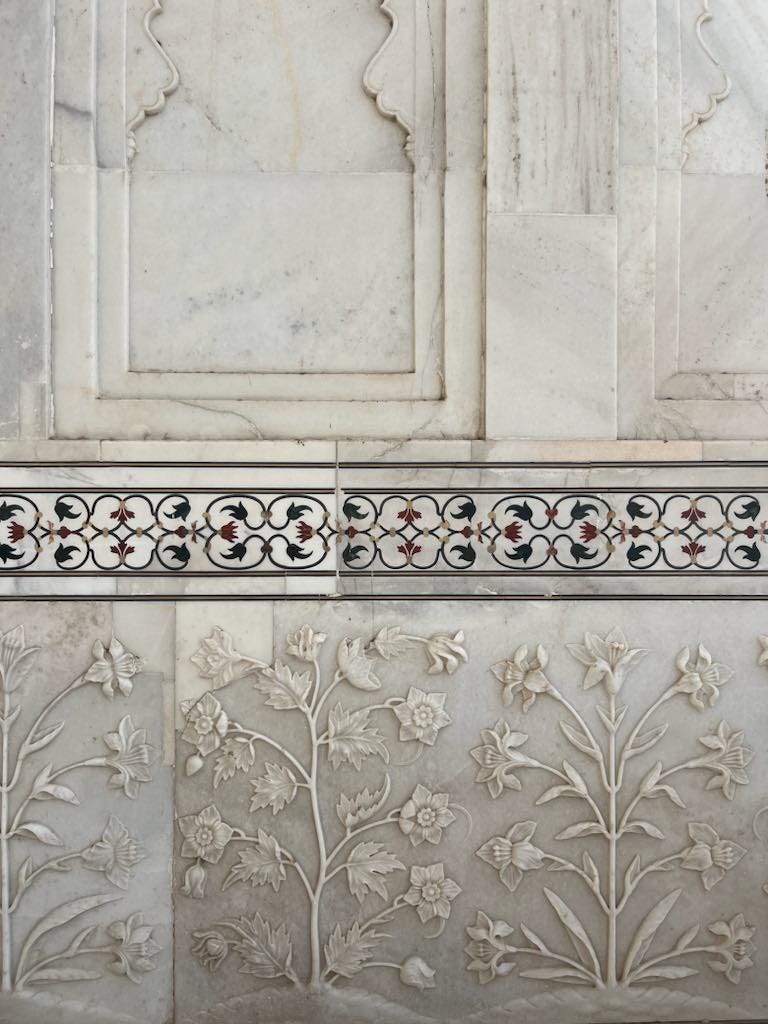
I was left in awe not because of the grandeur or stature, but rather the details: thousands of golf ball sized floral inlays with 64 distinct pieces, a frivolous commitment to symmetry and optical satisfaction, a blueprint that took years itself to draft onto Persian carpet, not parchment. Around nine thousand descendants of the original twenty thousand artisans who built the Taj live and work in Agra today. Many are employed by UNESCO to preserve the Taj and sites around the world. They are also some of the only individuals in the world permitted to work with Makrana marble.
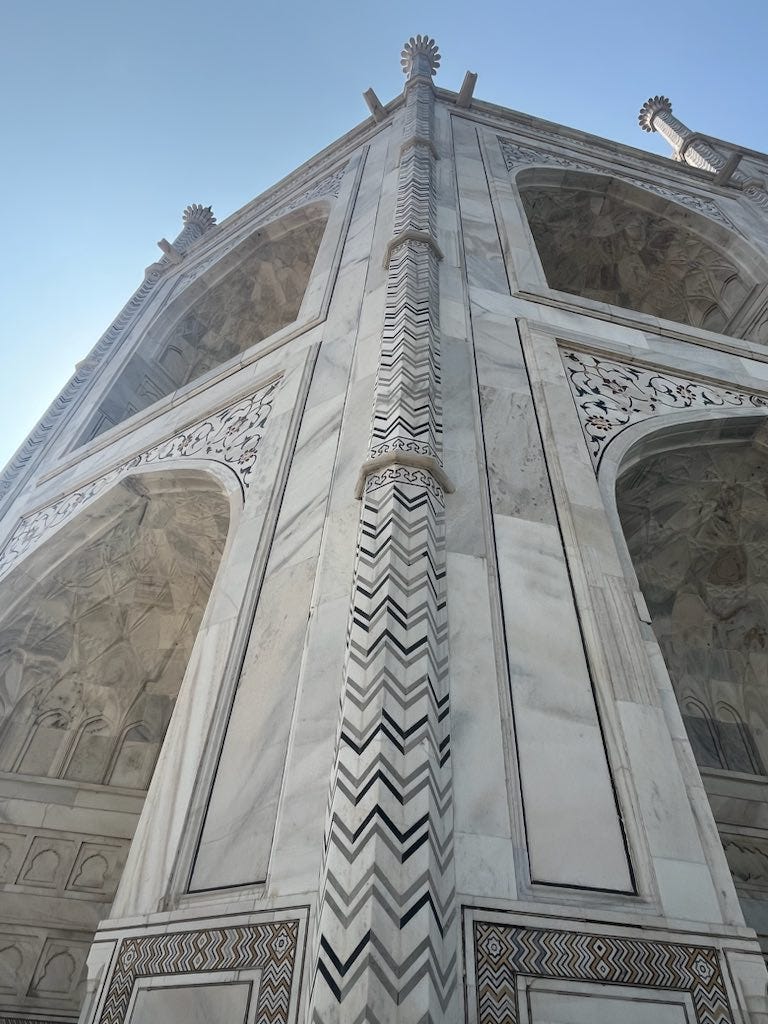
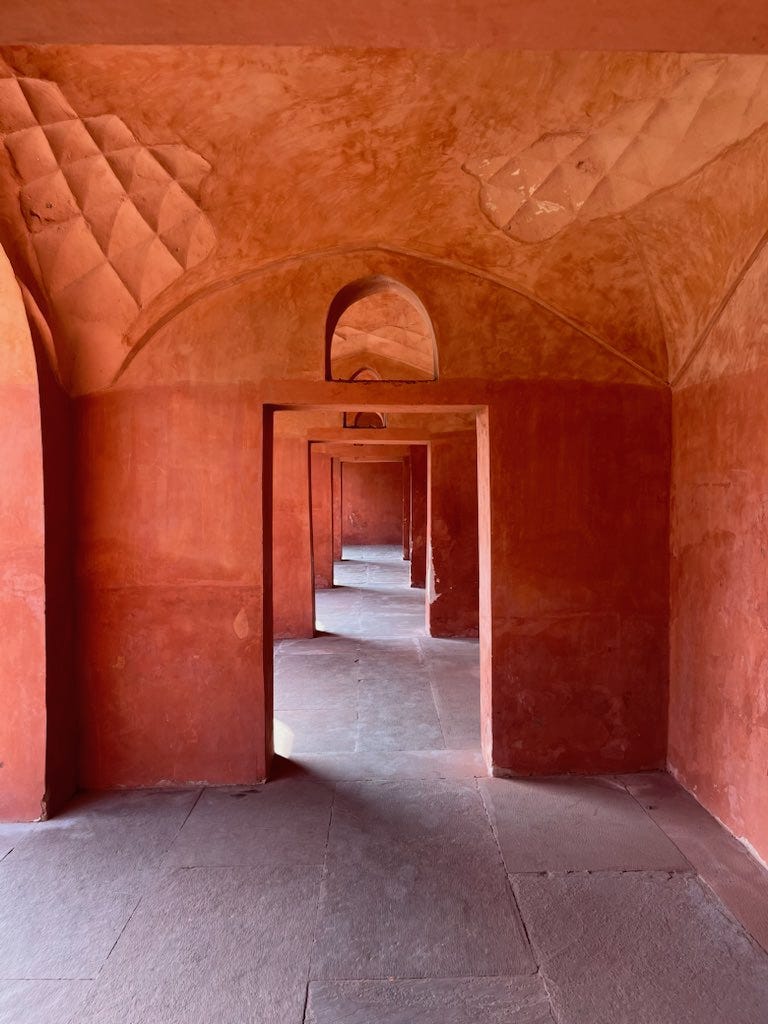
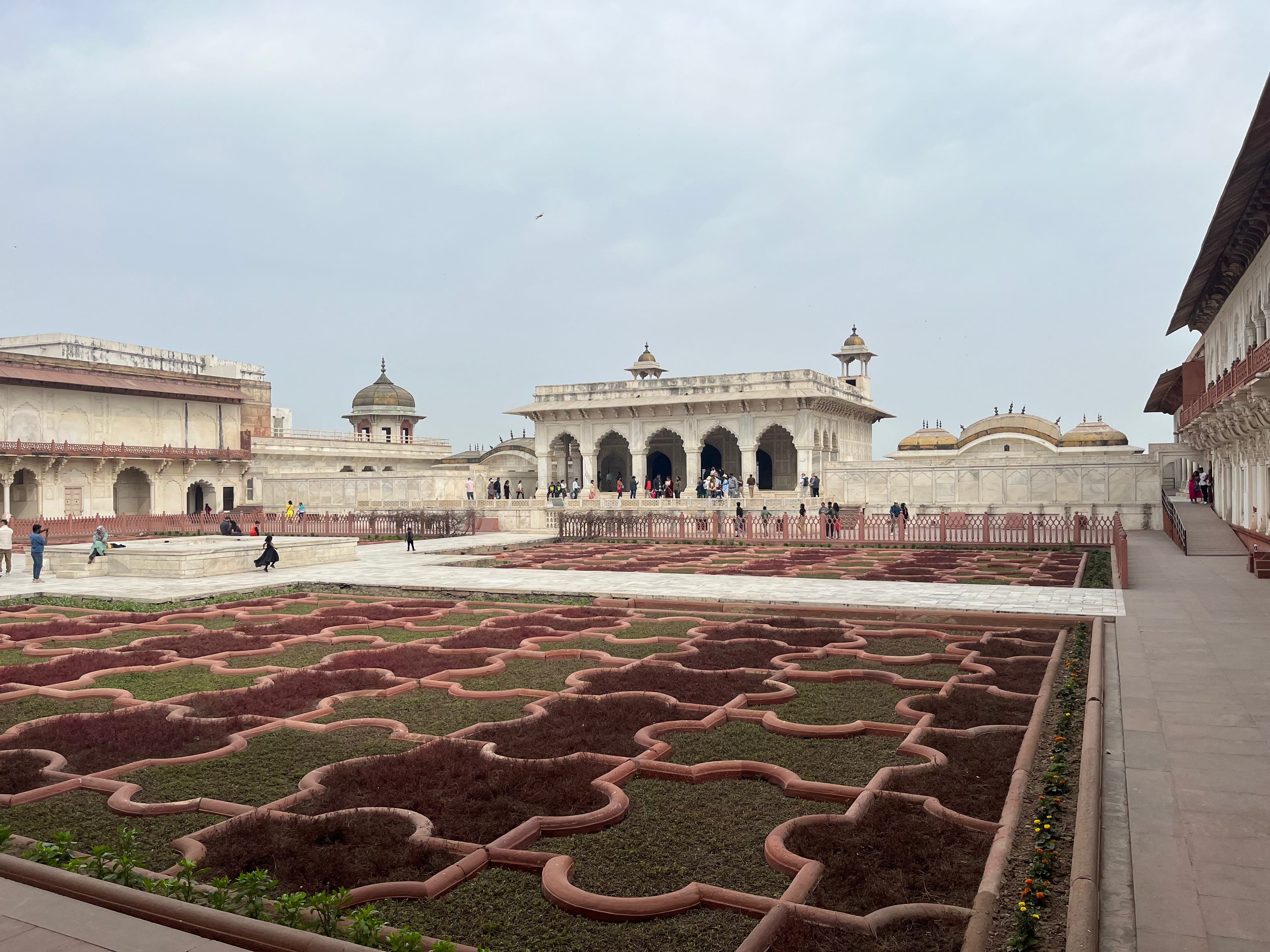
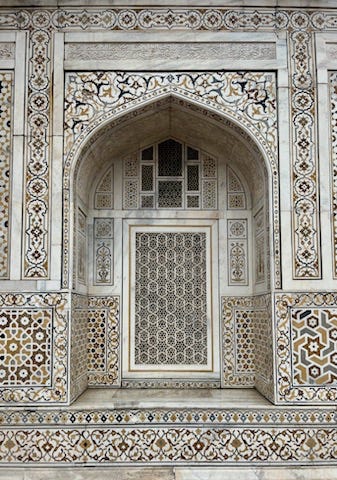
The Agra Fort and Baby Taj (otherwise known as the tomb of I'timād-ud-Daulah) showed similar themes and obvious references to the Taj. I preferred the humble scale and zany pattern combinations of the Baby Taj. Bonus points for its consistent and delightful use of a playful, marigold-colored stone. I lingered here for a while before heading home.
I returned to Delhi that evening, packed my things, and did my best to make up for lost sleep. With a cold settling in my throat, I caught an early flight to Dehradun and a cab from the airport to Rishikesh to begin two-hundred hours of yoga teacher training.
More photos.
It took my poor 2012 MacBook Air approximately six attempts to import a laughable seven photos. Though I wish I could share many more, this is all that my laptop can tolerate. Until the next one.