Chapter 3
On yoga teacher training and moments in between

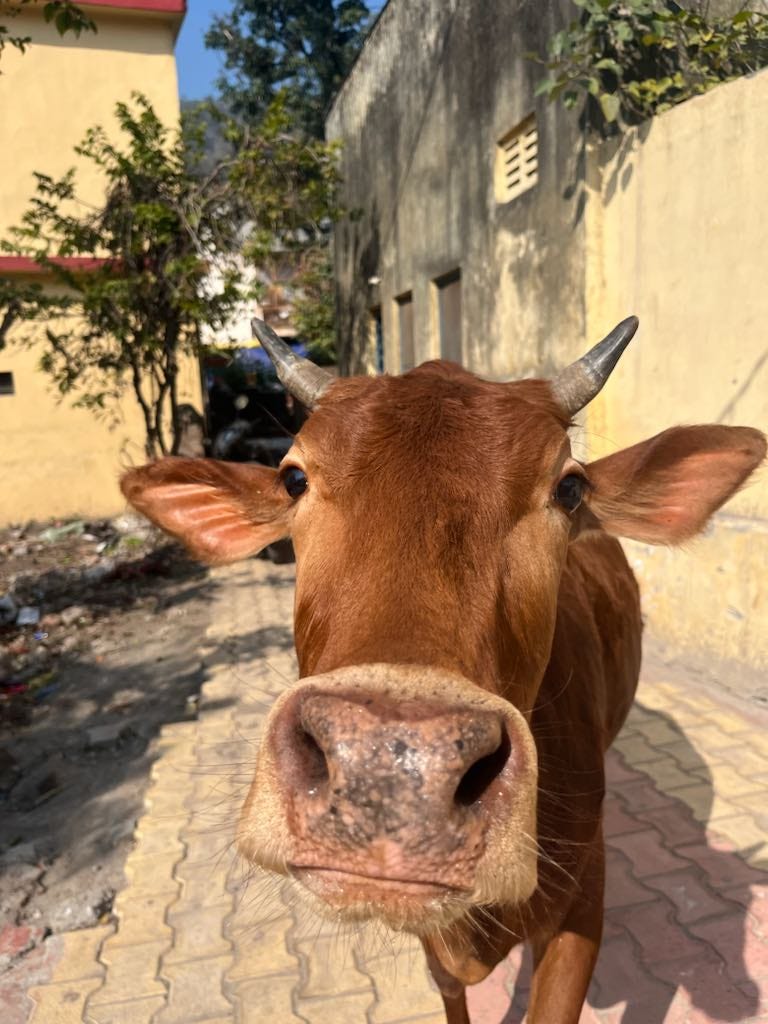
There were no traffic lights in the city of Rishikesh. It was more like a town actually. Where one may have expected chaos, one found a noisy yet respectfully rhythmic relationship between scooters, cars, tourists, residents, fruit carts, dogs, and cows (so many cows). Traffic remained assertive, yet patient.
Two cars would nearly collide head to head on a one lane road. One would reverse until there was enough space for the car to pull through, both drivers ensuring cows and school children remained unharmed as they passed. No one yelled.
Scooters tilted around blind turns, horns blaring as a preventative heads up instead of an accusatory signal of someone’s wrongdoing. Even the traffic accepted the yogic ways for which Rishikesh is known. The city sprawled along the Ganges river, spilling into two sides, each distinct and void of incandescent tricolor signals.
Our yoga school was located uphill from the Ram Jhula bridge. As I write this, I am officially a 200-hour certified yoga teacher (spoiler alert!). I, along with around sixty other students, elected to come, mostly on our own, to receive yoga teaching certifications over 200 or 300 hours. There were many Argentines, several French people, and six students from Bhutan (the world’s only carbon-negative country). I was one of four Americans.
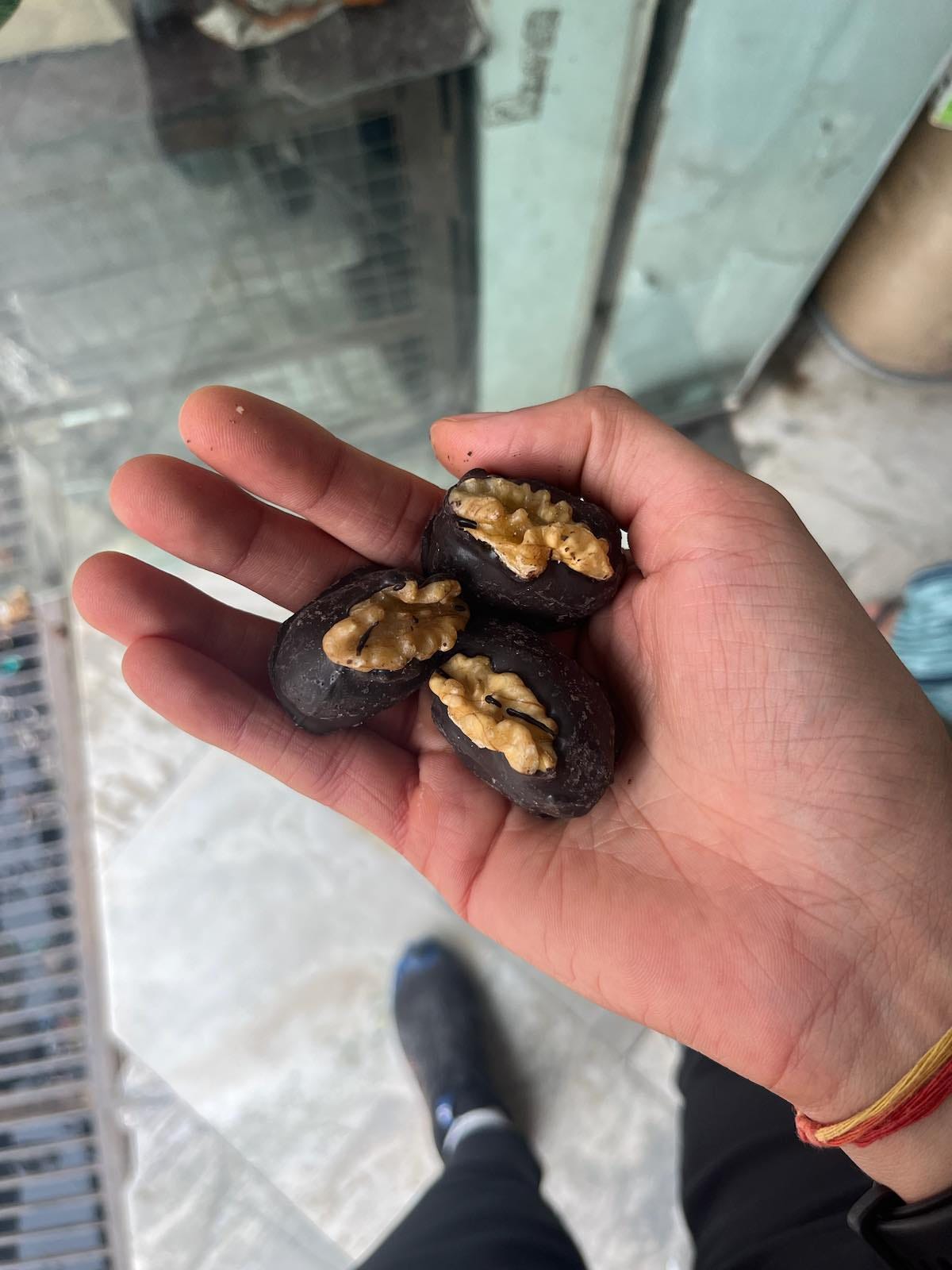
Each day started with tea at 5:45 AM before meeting on our mats for Hatha (a class focused on alignment and mobility that builds up to challenging postures) at 6:15. We had our morning practice, followed by an hour of Pranayama (breathing exercises), before breakfast was served at 9. Instead of heading to the dining hall, I walked three minutes from school down to the main road for a chai or an Americano from my favorite café, walking in any direction for as long as I could before Philosophy class at 10:30. On my way back, I typically acquired homemade chocolate-covered dates or an energy bar from the Ayurvedic shop.
The cows owned the streets in the morning. Most stores were slow to open. I stumbled upon souvenir shops pulling up their metal gates, temples with congregations of Sadhus gathering out front, food vendors frying their first samosas, and cows of all ages and colors chewing on vegetable scraps, paper cups, and household trash.
Philosophy was one of my favorite classes. Krishna, our instructor and owner of the school, lived on an Ashram for a number of years and gleefully shared stories from his time there with their accompanying concept and Sutras. Philosophy was followed by Anatomy or Ayurveda, then lunch at 1PM.
The food at the school was onion-free, garlic-free, and vegan. My gut microbiome had never been happier. A meal typically consisted of some kind of dal or chickpea, a vegetable cooked in a flavorful curry sauce, rice, chapati, and a salad of cucumbers, tomatoes, and red carrots. Sometimes we got beets. I was especially stoked when we got sprouts.
I used the free hour after lunch to study, walk, socialize, shower, or recharge my social battery on a rooftop or terrace. Class restarted at 3 with Alignment, followed by a fifteen minute tea break, Ashtanga (a dynamic vinyasa class with a set sequence of asanas), and then Meditation or Yoga Nidra from 6 to 7. Dinner was served from 7 to 8 and my lights were typically out by 10:30.
We had written exams on all subjects each week, and a teaching practical for our final exam: instructing a 30-minute class inclusive of an opening mantra in Sanskrit, a warm up and sun salutation, fifteen minutes of asana instruction, a closing meditation, and a Sanskrit mantra. We had half days on Wednesdays, and days off on Sundays, with optional classes, workshops and excursions.
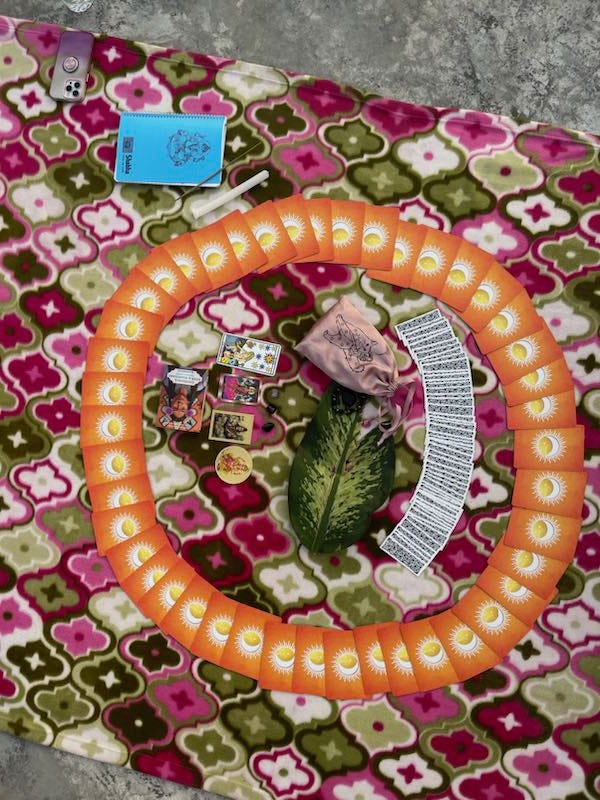
At the beginning of February, a few of the Argentine girls invited me to a new moon circle. Accompanied by about a dozen new friends, we meditated on a rooftop as the sun set over the hills and wrote down our intentions for this cycle. I drew the card of Apollo, beckoning me to notice divine messages in repeated signals or recurring themes.
One Sunday we drove to the Kunjapuri Temple at 5AM to watch the sunrise. A sitar player was strumming peacefully as the sun ascended. One Wednesday afternoon I hiked with Jenny and Patrick, a retired British couple from Hong Kong completing the 200-hour course together. Jenny was once an English teacher and Patrick, a policeman.
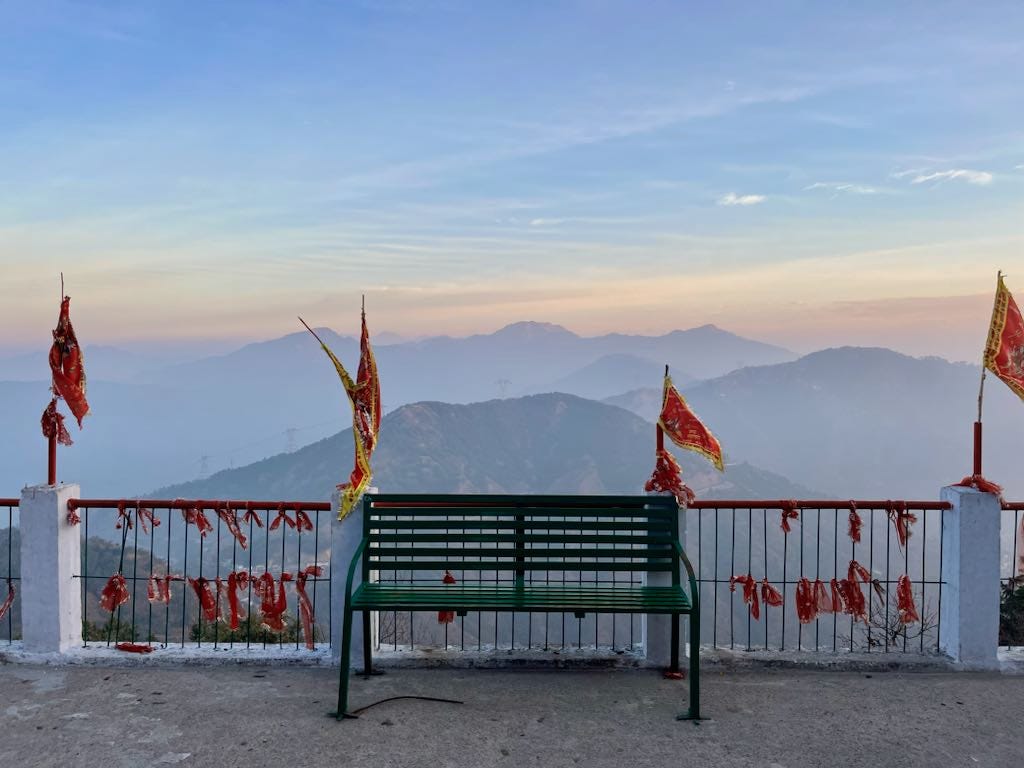
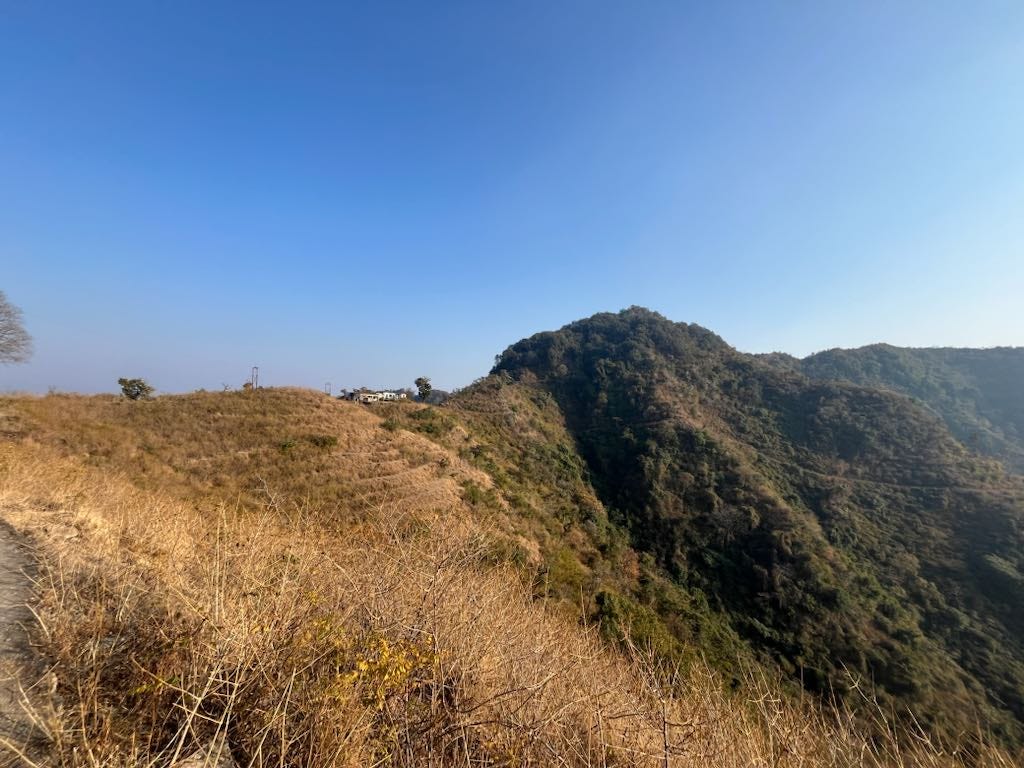
I had the intention of taking my final Wednesday solo to prepare my introverted mind for the overwhelm of impending assessments and goodbyes. I spent the morning alone in a rooftop yoga studio practicing the teaching routine for my final exam. I quickly ate lunch and set out for the Beatles Ashram down the road.
Meditating in uniform domes and attending lectures in cavernous halls, the Beatles learned about Transcendental Meditation and wrote 48 songs during their stay in Rishikesh in the Spring of 1968. The group stayed for three months before leaving after sexual misconduct allegations against their guru, Maharishi Mahesh. The ashram was abandoned in the 1970s, but reopened to the public in 2015 after artists had painted many of the ruins with vibrant, tributary murals.
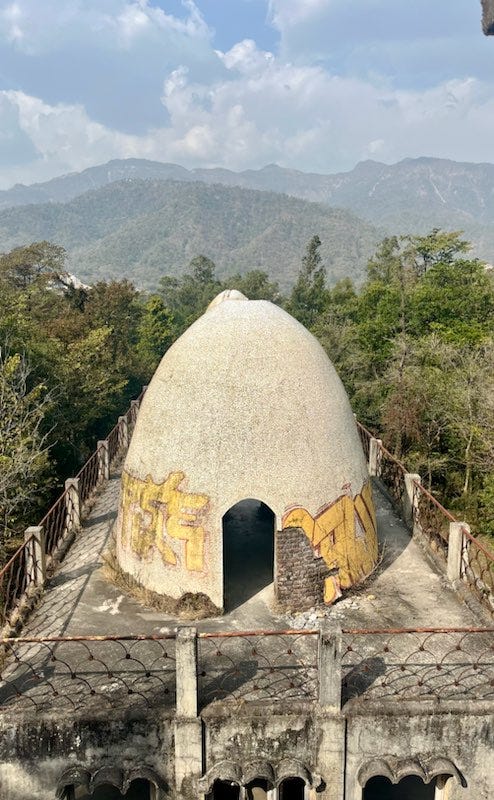
I climbed the crumbling stairs of a large dormitory, finding a sunny spot on the highest tier of the roof. An egg-shaped pod protruded from each level of the roof, all evenly blanketed in colorful mosaics. The pale and jagged pieces of tile shimmered in direct sunlight, yet they remained cool to the touch. I sat at the edge of the dome overlooking the oblong forms below me and the hills rising behind them. The only sound came from the riverbank down the hill at the property’s edge. I sat alone, in awe, and energetically stabilized by my surroundings.
I meditated for a moment and climbed down, descending from the ashram and into the hum of activity in town below. I walked a couple of miles along the Ganges to Laxman Jhula, my head still buzzing from the rooftop. Laxman, the neighboring town, was more established than the quaint street and riverside stalls by our school. It was home to river view cafés, German bakeries, and Tibetan shops selling wool crafts and momos. I sat by the river with my book before colliding with other travelers in town. I shared chai with a Bolivian Sikh and his two friends from Kazakhstan before watching the sunset on the beach, sharing more chocolate-covered dates, and returning to school for dinner.
I felt myself thrive in the rigid structure of yoga teacher training, craving the fond familiarity of study and practice. Focused work toward a goal was (and still is) a source of energy and a well-known remedy for my own mental chatter. Yet, it was in these unexpected moments with fellow travelers where I found myself energized, untethered from the identity of a studious introvert. I also found that my rumination dampened, and for the second time that day, I felt stabilized and free in the presence of new people and no plans.
I received my 200 hour certification the following Monday. I successfully and confidently taught a 30-minute class to my encouraging section members, I studied various subjects in my favorite cafés, and I noted my last few moments of joy: my friend Alexa’s birthday; an extremely memorable bowl of warm kichari (an Ayurvedic porridge of rice, lentils, spices, and ghee); morning yoga at the beach, the sunrise heating our backs in a final meditation.
My friend Elise and I spent the days following the course on the other side of the river in a neighboring, younger, and busier part of Rishikesh called Tapovan. I packed my things, and with a backpack on my shoulders and chest, and walked across the bridge and up a hill for thirty minutes. I sought yoga classes from different instructors, scribbling new teaching cues into a notebook beside my mat. I did a handstand for the first time. I flipped upside-down in aerial silks. I ordered lunch at a new café while I planned the next leg of my trip, letting my focus be pulled from my tasks toward conversations with other travelers.
My last day in Rishikesh, I hiked with Jenny and Patrick to the not-so-secret Secret Waterfall. Silvina and Elise accompanied us. The five of us stay for a while in silence. Silvie meditated on a flat rock, the sun drying her soaked pink shirt. Jenny quietly took photographs and wrote a poem in her notes app that she later shared with me. I read my book while the water rushed over my toes, loosening the yoga studio dust and rooftop soot embedded in my calloused and blistered feet.
We hiked down for an early supper as the sun slid behind the distant hills, sending a pastel yellow stripe through the middle of the snaking river. Silvie, Elise, and I met Clara and Jasmin, our fellow classmates, for live music at a neighboring cafe up the road. I collapsed onto a floor cushion next to Jasmin and tilted my head back against the café wall, rolling into exhausted laughter and sipping a sweet lassi as we freely swapped anecdotes about our encounters with new characters in Tapovan.
Jasmin shared that her conversations with fellow travelers are gentle, often personal, as if we are all a bit fragile. Perhaps that’s why we are all so far from home. Visitors to this town often come in pursuit of healing or relief. While in Rishikesh, many stretch emotionally, energetically, mentally, and physically, whether we planned to do so or not. And thus we learn to be patient, communicative, and open to change, letting our identities and attachments roll off of us and into the Ganges.
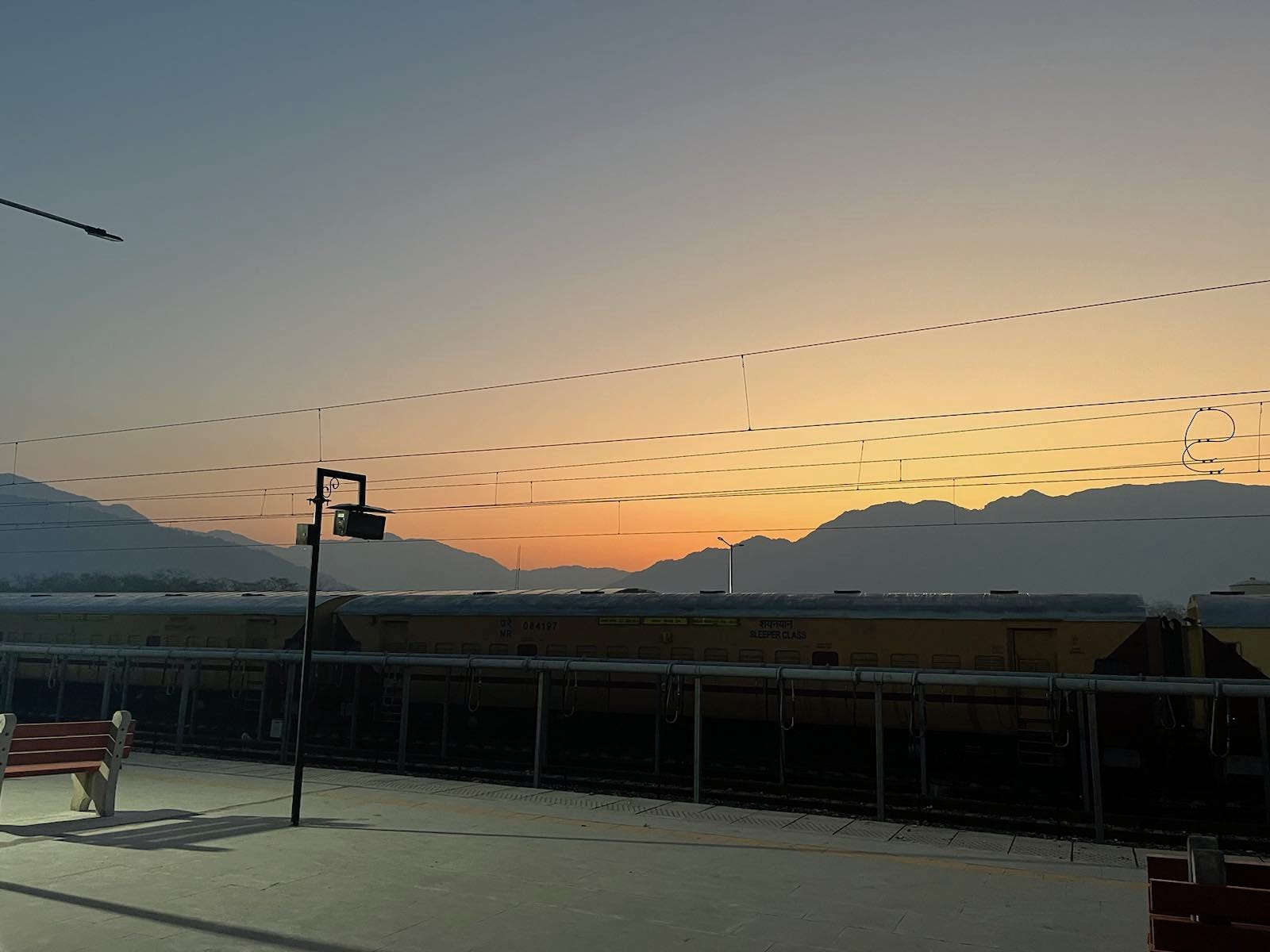
The next morning, my train pulled away from Rishikesh at sunrise. Six hours later I emerged in Delhi, warmer, sunnier, and clearer than I had left it. I did my laundry in a hotel sink and took myself out to dinner with my book as my only date. I ate a deeply flavorful black lentil dal and a paratha sprinkled with green dust made from mint leaves. I relished in my solitude.
I land in Singapore soon to rehash these stories and more with Kelsi and Emma over some hawker fare. Charlie lands tomorrow, and I simply cannot contain my excitement for the next two weeks. Feeling lucky. Report back soon.